Unlock Your Video's Potential with 3,000+ AI Parameters
Social Score for instant hook and retention signals. Deep video analysis for frame-level creative intelligence across 60+ categories.
Published May 21, 2026
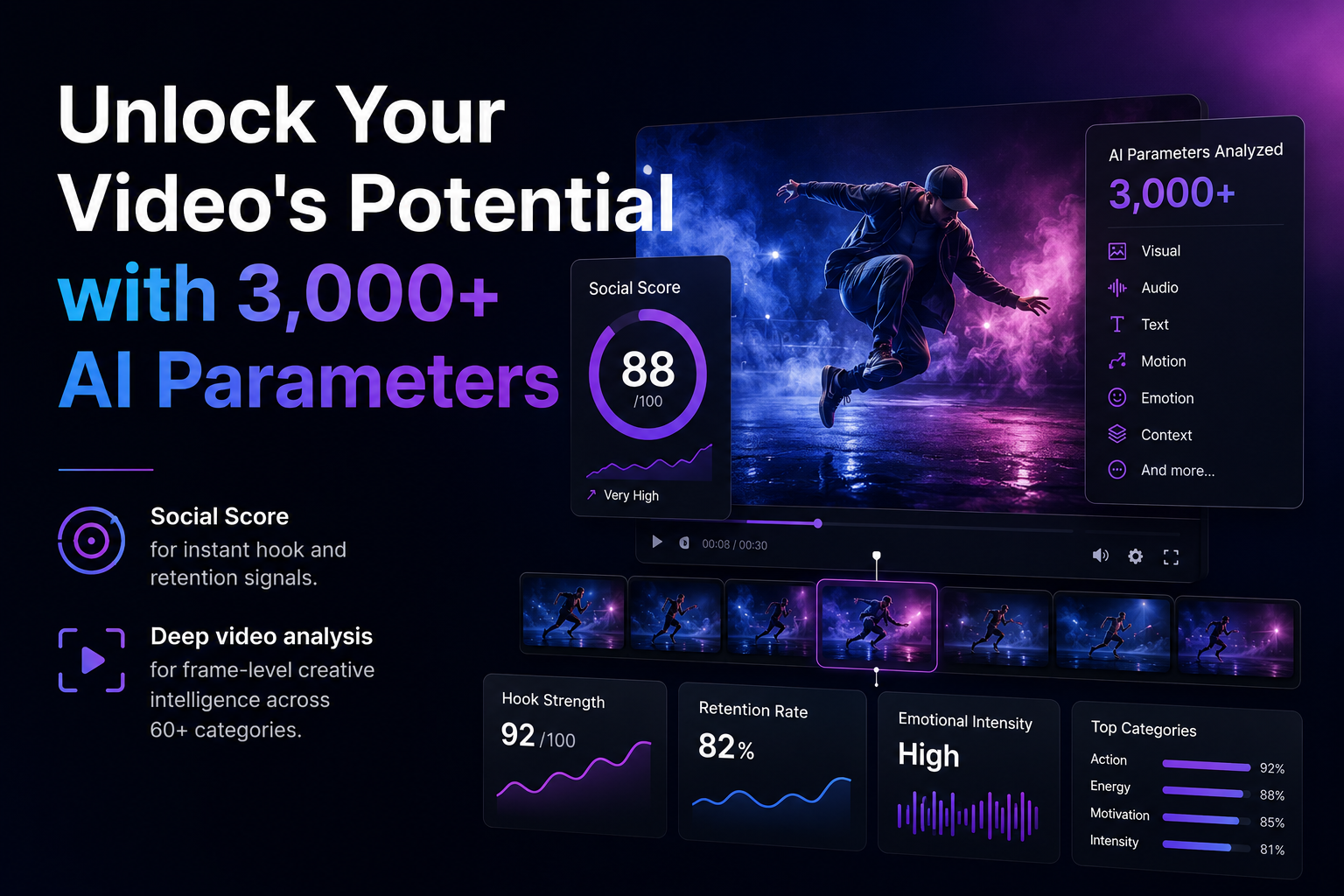
Short-form teams drown in clips but starve for answers. Views tell you something happened; they rarely tell you why a hook stalled, where retention dropped, or whether the next edit is worth shipping before paid spend.
Mentis AI closes that gap with two complementary layers: Social Score for fast, paste-a-link benchmarking on TikTok, Instagram Reels, YouTube Shorts, Facebook video, and X — and deep video analysis that extracts 3,000+ structured parameters across 60+ categories when you need production-grade creative QA.
This article walks through what those parameters mean in practice, with concrete examples you can compare to your own drafts before you brief an editor or send creative to media buyers.
The problem
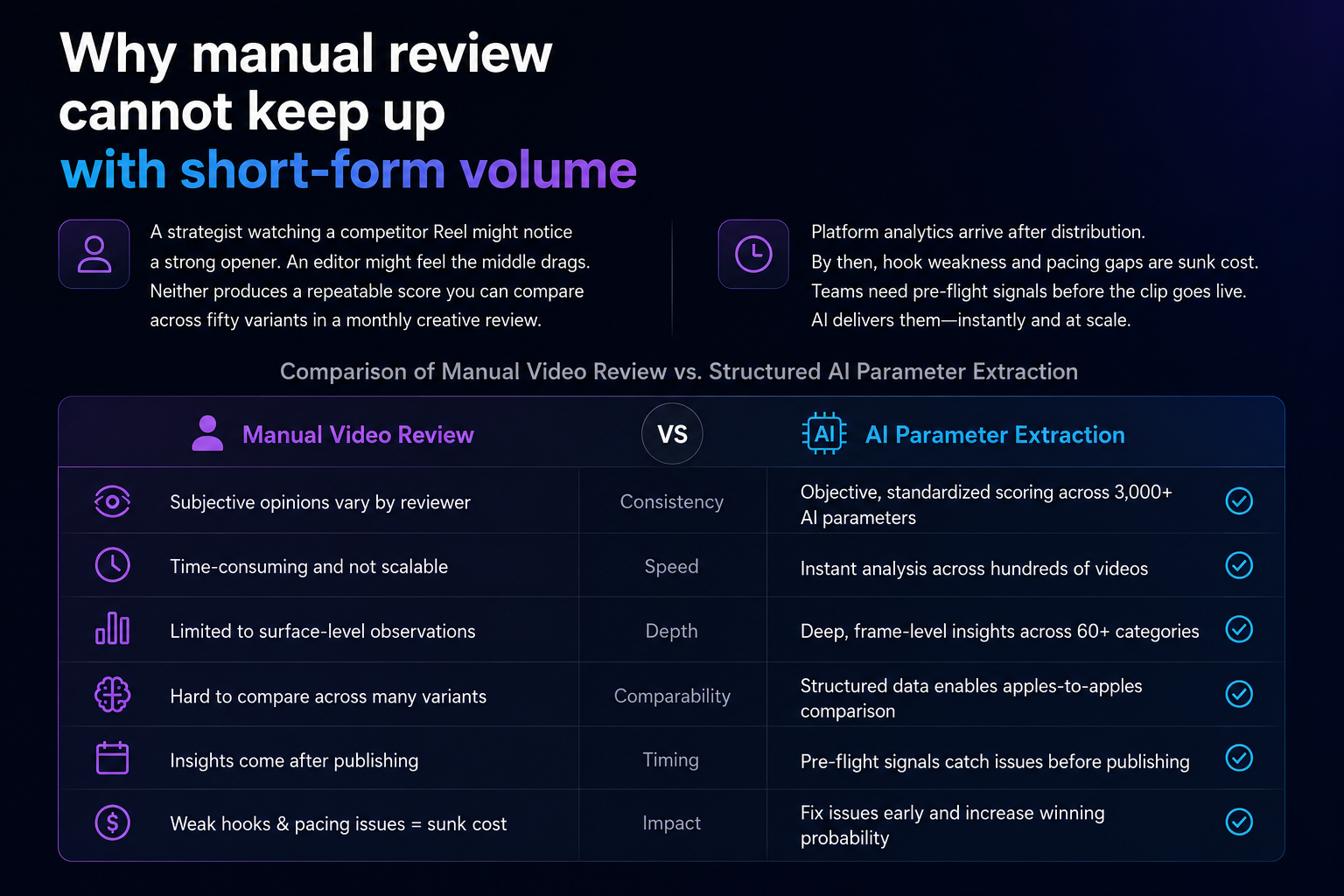
Why manual review cannot keep up with short-form volume
A strategist watching a competitor Reel might notice a strong opener. An editor might feel the middle drags. Neither produces a repeatable score you can compare across fifty variants in a monthly creative review.
Platform analytics arrive after distribution. By then, hook weakness and pacing gaps are sunk cost. Teams need pre-flight signals: technical readiness, first-three-second energy, caption readability with sound off, and category-specific virality patterns — before the clip goes live.
Example
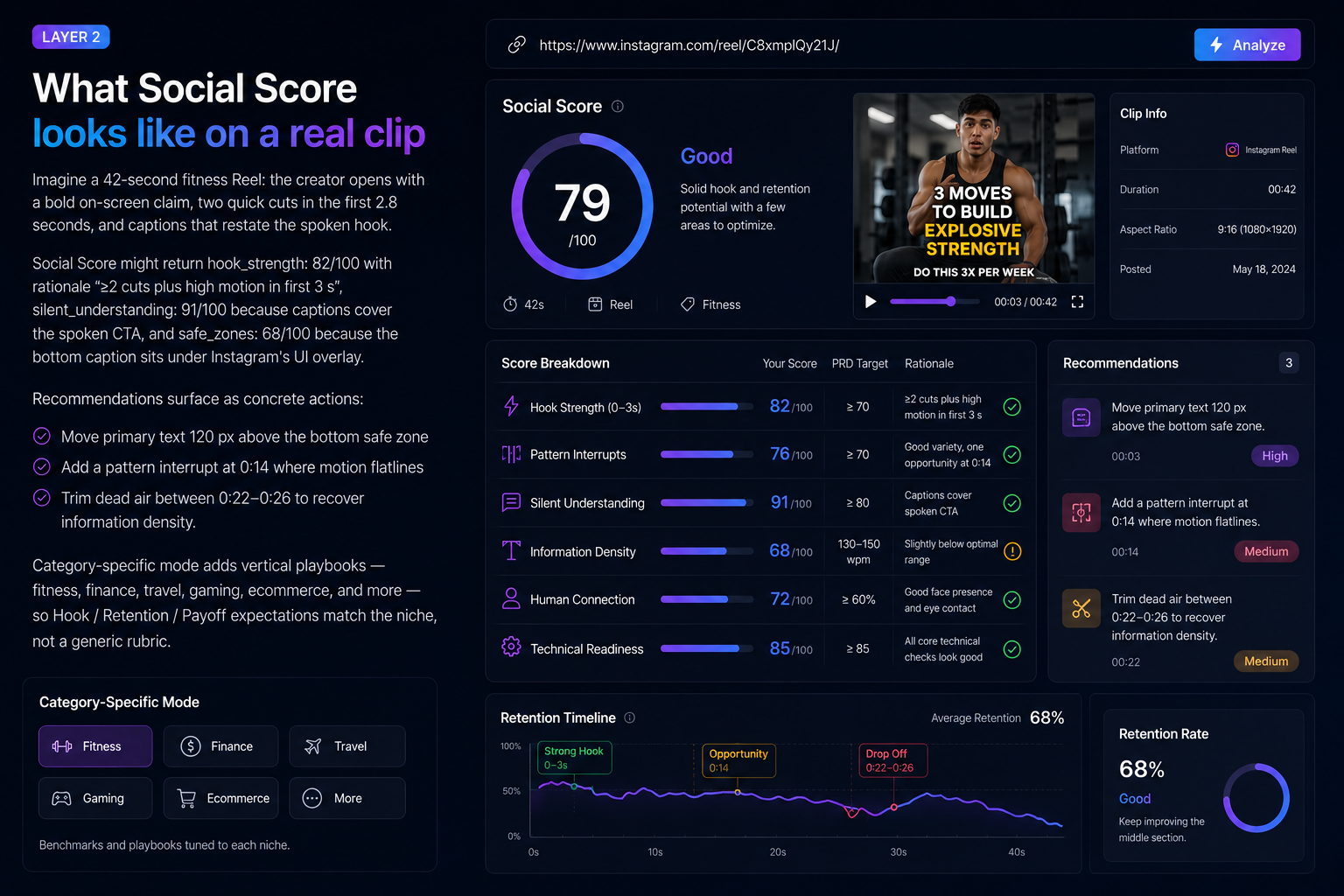
What Social Score looks like on a real clip
Imagine a 42-second fitness Reel: the creator opens with a bold on-screen claim, two quick cuts in the first 2.8 seconds, and captions that restate the spoken hook. Social Score might return hook_strength: 82/100 with rationale "≥2 cuts plus high motion in first 3 s", silent_understanding: 91/100 because captions cover the spoken CTA, and safe_zones: 68/100 because the bottom caption sits under Instagram's UI overlay.
Recommendations surface as concrete actions: "Move primary text 120 px above the bottom safe zone", "Add a pattern interrupt at 0:14 where motion flatlines", "Trim dead air between 0:22–0:26 to recover information density."
Category-specific mode adds vertical playbooks — fitness, finance, travel, gaming, ecommerce, and more — so Hook / Retention / Payoff expectations match the niche, not a generic rubric.
Layer 2
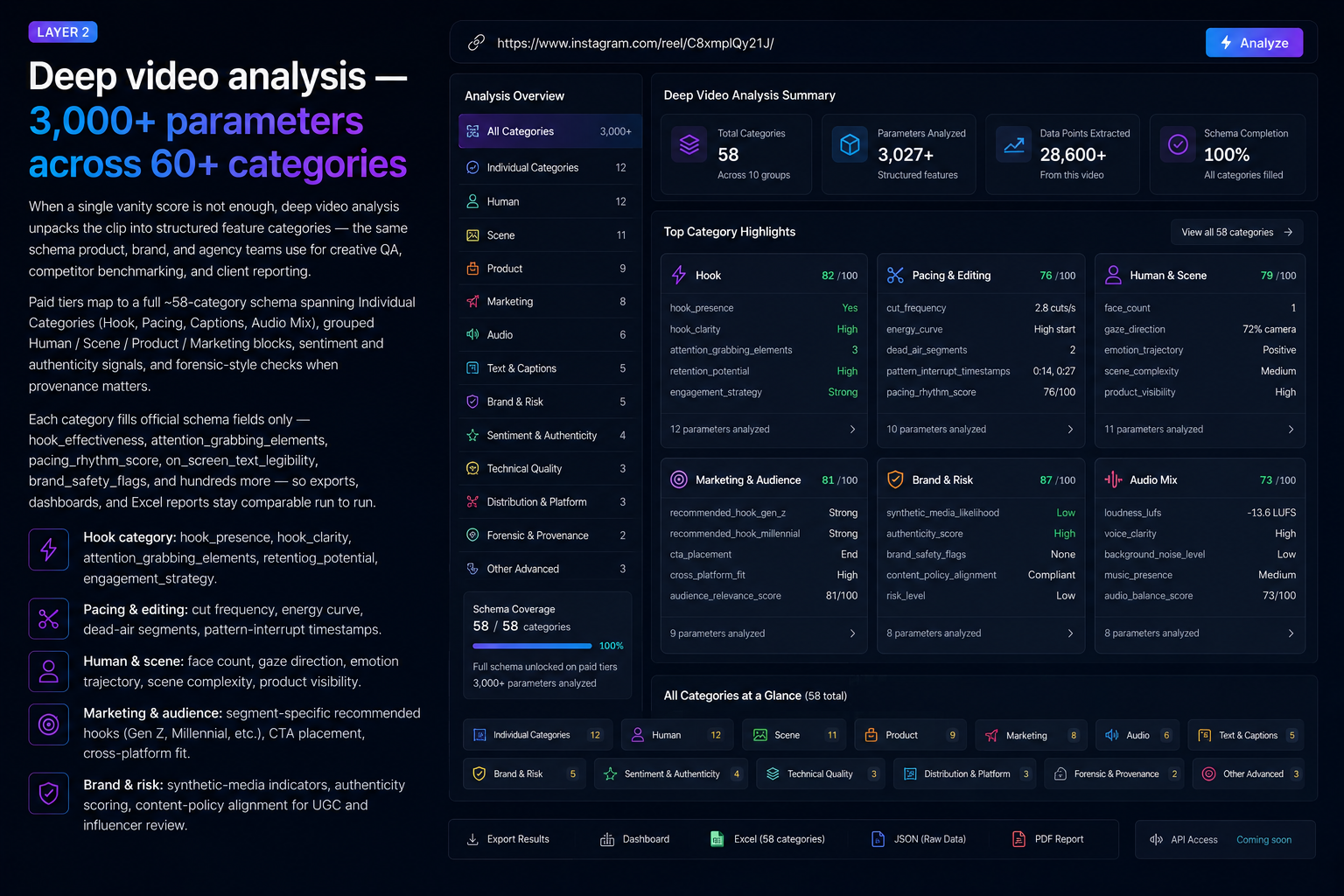
Deep video analysis — 3,000+ parameters across 60+ categories
When a single vanity score is not enough, deep video analysis unpacks the clip into structured feature categories — the same schema product, brand, and agency teams use for creative QA, competitor benchmarking, and client reporting.
Paid tiers map to a full ~58-category schema spanning Individual Categories (Hook, Pacing, Captions, Audio Mix), grouped Human / Scene / Product / Marketing blocks, sentiment and authenticity signals, and forensic-style checks when provenance matters.
Each category fills official schema fields only — hook_effectiveness, attention_grabbing_elements, pacing_rhythm_score, on_screen_text_legibility, brand_safety_flags, and hundreds more — so exports, dashboards, and Excel reports stay comparable run to run.
- Hook category: hook_presence, hook_clarity, attention_grabbing_elements, retention_potential, engagement_strategy.
- Pacing & editing: cut frequency, energy curve, dead-air segments, pattern-interrupt timestamps.
- Human & scene: face count, gaze direction, emotion trajectory, scene complexity, product visibility.
- Marketing & audience: segment-specific recommended hooks (Gen Z, Millennial, etc.), CTA placement, cross-platform fit.
- Brand & risk: synthetic-media indicators, authenticity scoring, content-policy alignment for UGC and influencer review.
Example
From 3,000 parameters to three edits that matter
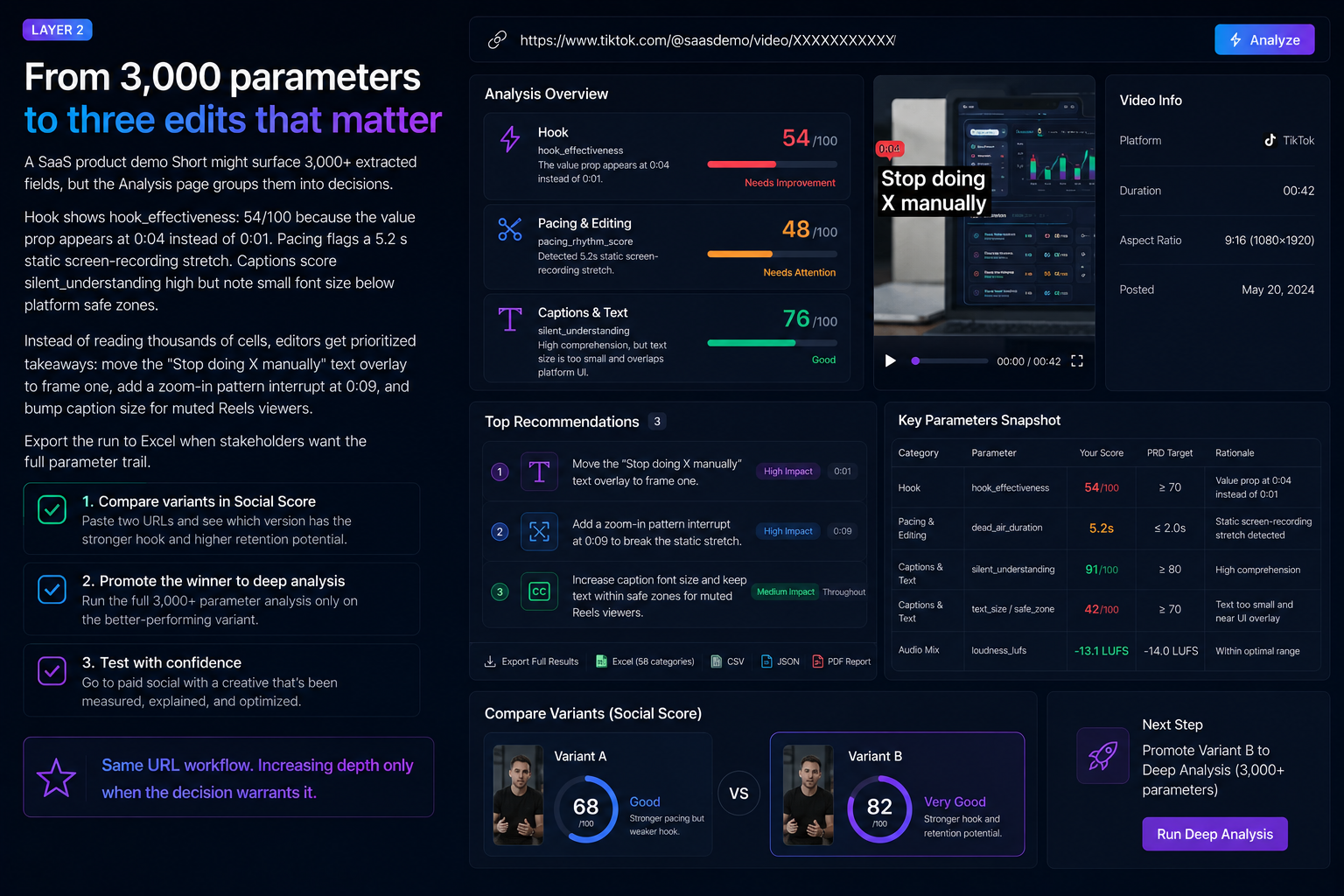
A SaaS product demo Short might surface 3,000+ extracted fields, but the Analysis page groups them into decisions. Hook shows hook_effectiveness: 54/100 because the value prop appears at 0:04 instead of 0:01. Pacing flags a 5.2 s static screen-recording stretch. Captions score silent_understanding high but note small font size below platform safe zones.
Instead of reading thousands of cells, editors get prioritized takeaways: move the "Stop doing X manually" text overlay to frame one, add a zoom-in pattern interrupt at 0:09, and bump caption size for muted Reels viewers. Export the run to Excel when stakeholders want the full parameter trail.
Compare two variants side-by-side in Social Score, then promote the winner to deep analysis before a paid social test — same URL workflow, increasing depth only when the decision warrants it.
Teams
Who uses Social Score and deep analysis together
Solo creators paste a link before posting to catch safe-zone and hook issues early. Agency editors run batch Social Score on competitor sets, then deep-analyze the top three performers for client strategy decks. In-house growth teams pair both layers with the viral hooks library so monthly reviews start from evidence, not opinions alone.
Brand and compliance teams still rely on deep analysis for UGC review, influencer benchmarking, and forensic checks when a clip's authenticity is questioned — while performance marketers use Social Score for rapid creative iteration ahead of paid tests.
Workflow
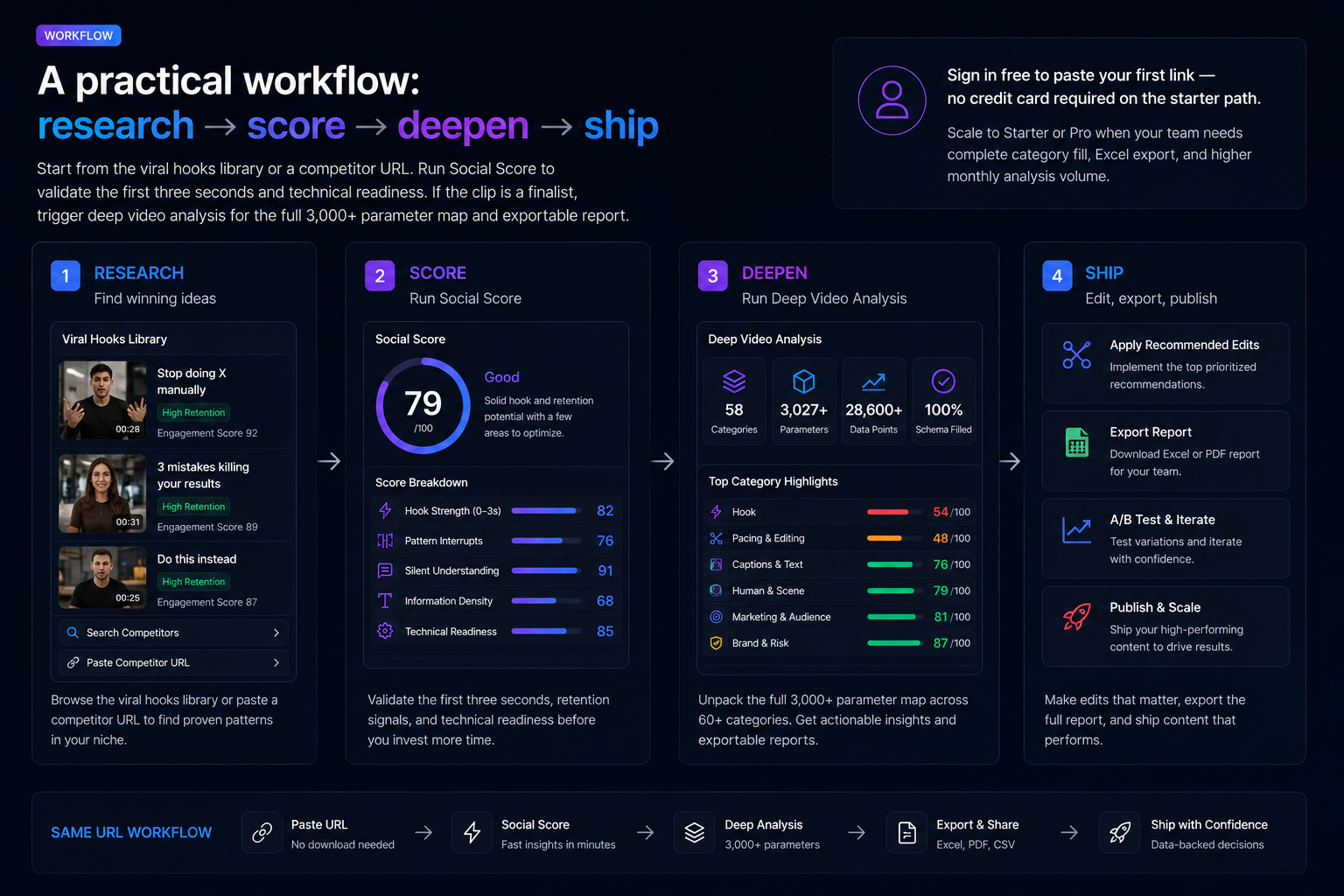
A practical workflow: research → score → deepen → ship
Start from the viral hooks library or a competitor URL. Run Social Score to validate the first three seconds and technical readiness. If the clip is a finalist, trigger deep video analysis for the full 3,000+ parameter map and exportable report.
Sign in free to paste your first link — no credit card required on the starter path. Scale to Starter or Pro when your team needs complete category fill, Excel export, and higher monthly analysis volume.
Paste a link. See your parameters.
Start with Social Score on any supported short-form URL, then upgrade to deep analysis when you need the full 3,000+ feature map across 60+ categories.
Related resources
- Product overviewFull capability map for creator analytics, hook optimization, and enterprise video intelligence.
- Viral hooks library4,000+ proven openers with psychology notes — pair with analysis before you shoot.
- TikTok analyzerPaste a TikTok URL for hook scores without a downloader.
- FAQPlatforms, credits, free vs paid tiers, and agency workflows.
Layer 1
Social Score — paste a link, get hook and retention signals in minutes
Social Score is built for speed. Paste a supported URL — no download step, no local MP4 — and Mentis evaluates the clip against a research-grade rubric tuned for short-form social contexts.
Every run returns scored metrics with raw values, PRD targets, and one-line rationales so you can brief edits with evidence instead of taste alone.